It is believed that Reichenstein was founded as a feudal castle by the stewards of the Kornelimünster Abbey near Aachen.
History of Reichenstein Castle
The Castle on the Middle Rhine and the Middle Rhine Valley
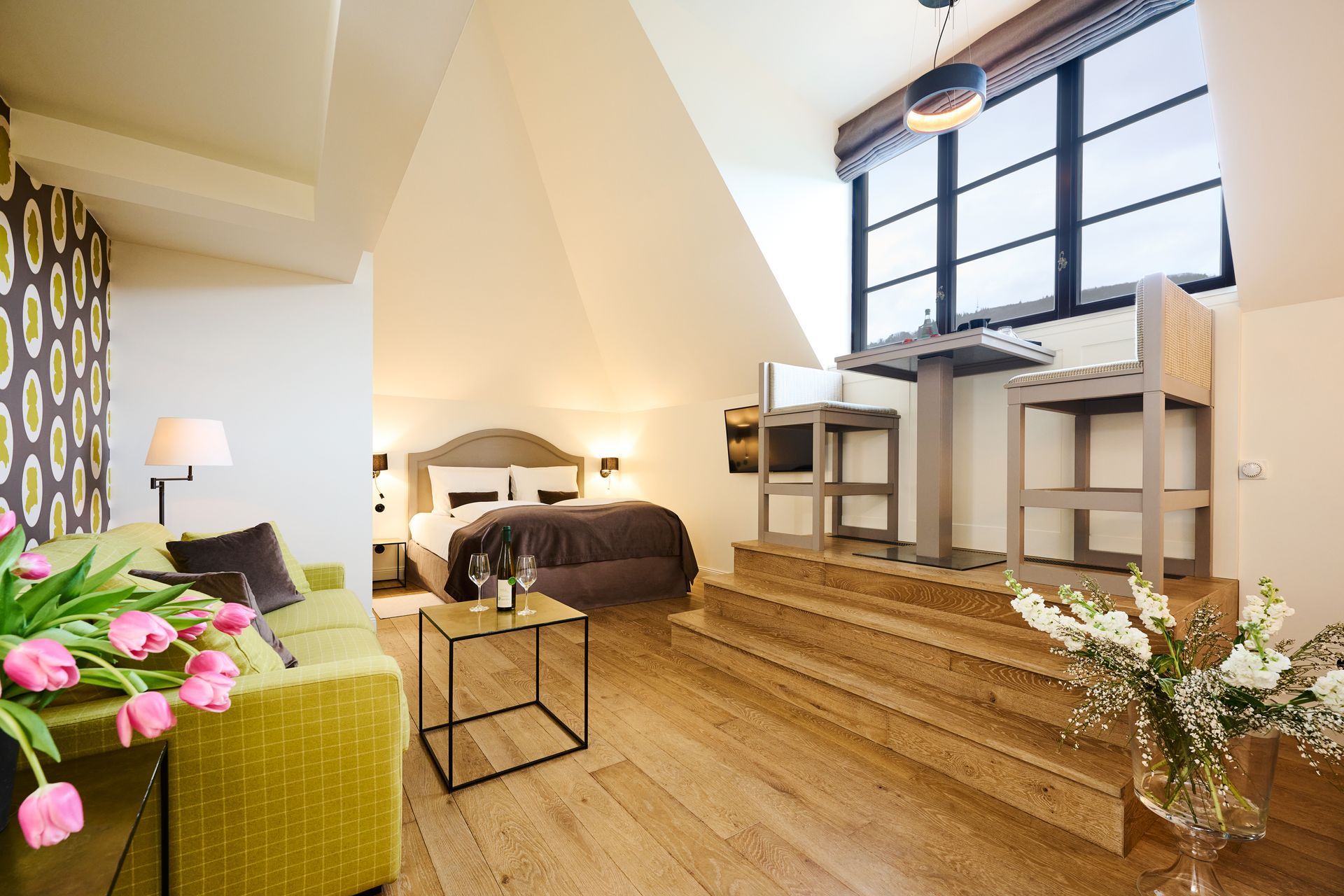
Discover the charming rooms at Reichenstein Castle. Since 2002, the Upper Middle Rhine Valley has been a UNESCO World Heritage Site. The wild and romantic cultural landscape of the Middle Rhine, between Bingen and Koblenz, is known for its numerous castles, palaces, and ruins. Many of these cultural sites have been very well preserved to this day.
One of them is Reichenstein Castle. In addition to the castle hotel and the Puricelli restaurant, Reichenstein Castle also features a museum that offers detailed insights into the region’s eventful past as well as life at Reichenstein Castle.
Why are there so many castles in the Middle Rhine Valley?
The Middle Rhine Valley stretches for 67 kilometers. On both sides of the Rhine, there are nearly forty castles. This concentration of castles is unique in the world. The reason the region boasts so many castles lies in the Rhine itself.
In the Middle Ages, the Rhine was one of the most important trade routes between the north and the south. The princes and nobles of the Middle Rhine region built castles not only as fortresses and residences, but also as customs posts to collect money and duties from the numerous merchants and sailors on the Rhine. And they certainly didn’t hold back!
The Romanticism of Castles and the Rhine in the 19th Century
From the late 18th century through the late 19th century, the Middle Rhine Valley experienced a new golden age. The era of so-called “Rhine Romanticism” drew numerous painters, poets, and thinkers to the Rhine. Here, on the banks of this mystical river, there was still something “authentic” and “unspoiled” to be discovered. The picturesque slopes with their vineyards on both sides of the Rhine, the dark forests, and the quaint villages nestled along the narrow riverbanks were considered the epitome of a wild, romantic ideal landscape—crowned by numerous castles, palaces, and ruins. The landscape painter William Turner could not resist the beauty of the Rhine region any more than the poet Heinrich Heine could. Whether through impressive paintings or Heine’s Loreley poem: the Middle Rhine Valley has lost none of its charm to this day.
Why are there so many castles in the Middle Rhine Valley?
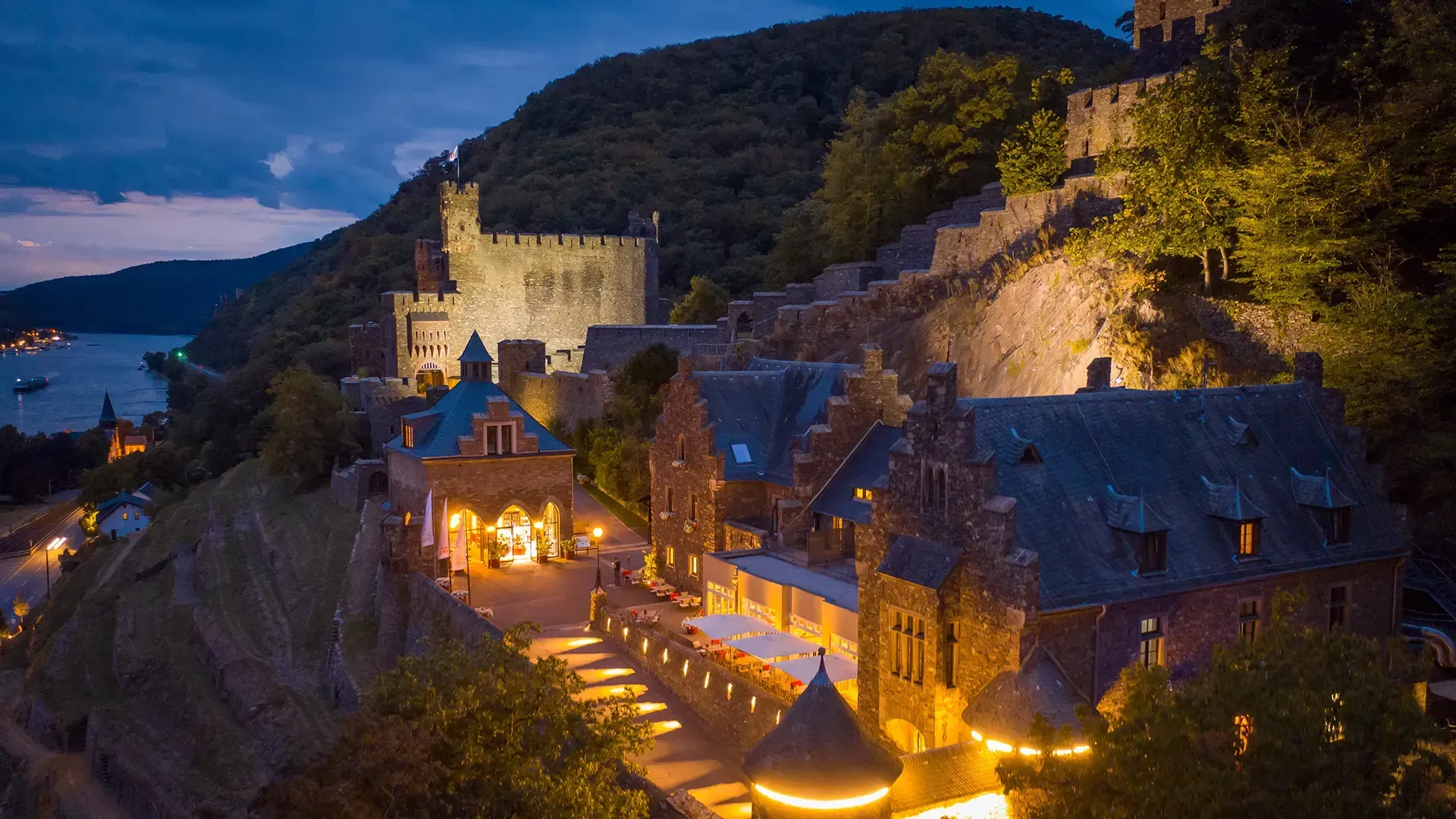
Unlike most castles in the Middle Rhine Valley, the privately owned Reichenstein Castle does not sit atop a mountain ridge, but rather on a rocky outcrop—almost directly above the Rhine. Often left to fall into disrepair, Reichenstein Castle—like many other castles in the Upper Middle Rhine Valley—was revitalized as part of the “Rhine Romanticism” movement. After its conversion from 1899 to 1902 into a Neo-Gothic residential castle, the castle was finally opened to the public in 1936. Every effort was made to recreate the original living conditions of the late 19th century as closely as possible. The furnishings of the individual museum rooms were complemented by additional pieces of furniture and exhibits from the original private collection of the owner family. A unique atmosphere that enchants guests and museum visitors from all over the world.
Why are there so many castles in the Middle Rhine Valley?
The Middle Rhine Valley stretches for 67 kilometers. On both sides of the Rhine, there are nearly forty castles. This concentration of castles is unique in the world. The reason the region boasts so many castles lies in the Rhine itself.
In the Middle Ages, the Rhine was one of the most important trade routes between the north and the south. The princes and nobles of the Middle Rhine region built castles not only as fortresses and residences, but also as customs posts to collect money and duties from the numerous merchants and sailors on the Rhine. And they certainly didn’t hold back!
The Romanticism of Castles and the Rhine in the 19th Century
From the late 18th century through the late 19th century, the Middle Rhine Valley experienced a new golden age. The era of so-called “Rhine Romanticism” drew numerous painters, poets, and thinkers to the Rhine. Here, on the banks of this mystical river, there was still something “authentic” and “unspoiled” to be discovered. The picturesque slopes with their vineyards on both sides of the Rhine, the dark forests, and the quaint villages nestled along the narrow riverbanks were considered the epitome of a wild, romantic ideal landscape—crowned by numerous castles, palaces, and ruins. The landscape painter William Turner could not resist the beauty of the Rhine region any more than the poet Heinrich Heine could. Whether through impressive paintings or Heine’s Loreley poem: the Middle Rhine Valley has lost none of its charm to this day.
Reichenstein Castle near Trechtingshausen on the Middle Rhine
Unlike most castles in the Middle Rhine Valley, the privately owned Reichenstein Castle does not sit atop a mountain ridge, but rather on a rocky outcrop—almost directly above the Rhine. Often left to fall into disrepair, Reichenstein Castle—like many other castles in the Upper Middle Rhine Valley—was revitalized as part of the “Rhine Romanticism” movement. After its conversion from 1899 to 1902 into a Neo-Gothic residential castle, the castle was finally opened to the public in 1936. Every effort was made to recreate the original living conditions of the late 19th century as closely as possible. The furnishings of the individual museum rooms were complemented by additional pieces of furniture and exhibits from the original private collection of the owner family. A unique atmosphere that enchants guests and museum visitors from all over the world.
Why are there so many castles in the Middle Rhine Valley?
The Middle Rhine Valley stretches for 67 kilometers. On both sides of the Rhine, there are nearly forty castles. This concentration of castles is unique in the world. The reason the region boasts so many castles lies in the Rhine itself.
In the Middle Ages, the Rhine was one of the most important trade routes between the north and the south. The princes and nobles of the Middle Rhine region built castles not only as fortresses and residences, but also as customs posts to collect money and duties from the numerous merchants and sailors on the Rhine. And they certainly didn’t hold back!
The Romanticism of Castles and the Rhine in the 19th Century
From the late 18th century through the late 19th century, the Middle Rhine Valley experienced a new golden age. The era of so-called “Rhine Romanticism” drew numerous painters, poets, and thinkers to the Rhine. Here, on the banks of this mystical river, there was still something “authentic” and “unspoiled” to be discovered. The picturesque slopes with their vineyards on both sides of the Rhine, the dark forests, and the quaint villages nestled along the narrow riverbanks were considered the epitome of a wild, romantic ideal landscape—crowned by numerous castles, palaces, and ruins. The landscape painter William Turner could not resist the beauty of the Rhine region any more than the poet Heinrich Heine could. Whether through impressive paintings or Heine’s Loreley poem: the Middle Rhine Valley has lost none of its charm to this day.
Why are there so many castles in the Middle Rhine Valley?
Unlike most castles in the Middle Rhine Valley, the privately owned Reichenstein Castle does not sit atop a mountain ridge, but rather on a rocky outcrop—almost directly above the Rhine. Often left to fall into disrepair, Reichenstein Castle—like many other castles in the Upper Middle Rhine Valley—was revitalized as part of the “Rhine Romanticism” movement. After its conversion from 1899 to 1902 into a Neo-Gothic residential castle, the castle was finally opened to the public in 1936. Every effort was made to recreate the original living conditions of the late 19th century as closely as possible. The furnishings of the individual museum rooms were complemented by additional pieces of furniture and exhibits from the original private collection of the owner family. A unique atmosphere that enchants guests and museum visitors from all over the world.
Why are there so many castles in the Middle Rhine Valley?
The Middle Rhine Valley stretches for 67 kilometers. On both sides of the Rhine, there are nearly forty castles. This concentration of castles is unique in the world. The reason the region boasts so many castles lies in the Rhine itself.
In the Middle Ages, the Rhine was one of the most important trade routes between the north and the south. The princes and nobles of the Middle Rhine region built castles not only as fortresses and residences, but also as customs posts to collect money and duties from the numerous merchants and sailors on the Rhine. And they certainly didn’t hold back!
The Romanticism of Castles and the Rhine in the 19th Century
From the late 18th century through the late 19th century, the Middle Rhine Valley experienced a new golden age. The era of so-called “Rhine Romanticism” drew numerous painters, poets, and thinkers to the Rhine. Here, on the banks of this mystical river, there was still something “authentic” and “unspoiled” to be discovered. The picturesque slopes with their vineyards on both sides of the Rhine, the dark forests, and the quaint villages nestled along the narrow riverbanks were considered the epitome of a wild, romantic ideal landscape—crowned by numerous castles, palaces, and ruins. The landscape painter William Turner could not resist the beauty of the Rhine region any more than the poet Heinrich Heine could. Whether through impressive paintings or Heine’s Loreley poem: the Middle Rhine Valley has lost none of its charm to this day.
Reichenstein Castle near Trechtingshausen on the Middle Rhine
Unlike most castles in the Middle Rhine Valley, the privately owned Reichenstein Castle does not sit atop a mountain ridge, but rather on a rocky outcrop—almost directly above the Rhine. Often left to fall into disrepair, Reichenstein Castle—like many other castles in the Upper Middle Rhine Valley—was revitalized as part of the “Rhine Romanticism” movement. After its conversion from 1899 to 1902 into a Neo-Gothic residential castle, the castle was finally opened to the public in 1936. Every effort was made to recreate the original living conditions of the late 19th century as closely as possible. The furnishings of the individual museum rooms were complemented by additional pieces of furniture and exhibits from the original private collection of the owner family. A unique atmosphere that enchants guests and museum visitors from all over the world.
Why are there so many castles in the Middle Rhine Valley?
The Middle Rhine Valley stretches for 67 kilometers and is known for its exceptionally high concentration of some forty castles along the Rhine. This concentration, unique in the world, can be explained by the Rhine’s great importance in the Middle Ages as a central trade route between Northern and Southern Europe. The castles were built by princes and nobles not only as residences and fortifications, but also specifically as customs stations to collect duties from the numerous merchants and sailors.
The Romanticism of Castles and the Rhine in the 19th Century
From the late 18th century through the late 19th century, the Middle Rhine Valley experienced a new golden age. During the era of Rhine Romanticism, the region attracted numerous artists, poets, and thinkers who sought the “authentic” and “unadulterated” along the Rhine. The steep vineyards, dark forests, and picturesque villages along the river were considered the epitome of a wild, romantic landscape, characterized by castles, palaces, and ruins. Artists such as the landscape painter William Turner and the poet Heinrich Heine drew inspiration from this setting. Their works—such as Turner’s paintings or Heine’s Loreley poem—continue to contribute to the enduring charm of the Middle Rhine Valley to this day.
Reichenstein Castle near Trechtingshausen on the Middle Rhine
Unlike many castles in the Middle Rhine Valley, the privately owned Reichenstein Castle is not situated on a mountain ridge, but on a rocky outcrop directly above the Rhine. Like numerous other castles in the region, it was saved from ruin and restored during the “Rhine Romanticism” movement. Between 1899 and 1902, it was converted into a Neo-Gothic residential castle before being opened to the public in 1936. The goal was to recreate the living conditions of the late 19th century as authentically as possible, complemented by original furniture and artifacts from the owner family’s collection. The result is a unique atmosphere that captivates visitors from all over the world.
Reichenstein Castle Through the Ages
First documented mention of the castle as “castrum Richenstein,” in which Philip III of Bolanden is listed as lord of Reichenstein Castle and the bailiwick of Trechtingshausen.
Conquest and destruction by Rudolph of Habsburg. Reichenstein Castle is placed under a ban on reconstruction.
The Counts Palatine of the Rhineland transferred the Reichenstein to the Electorate of Mainz. A new main castle was constructed, featuring a double curtain wall, an inner courtyard, a rectangular residential tower, and an outer bailey to the north.
As a result of the War of the Palatinate Succession, Reichenstein Castle was left to fall into ruin.
Further renovation of the ruins and the tower into a residential castle, as well as two changes of ownership.
The wealthy industrialist and new owner of Reichenstein Castle, Baron Dr. Nikolaus Kirsch-Puricelli, had the castle converted into a neo-Gothic residence in the English style.
11:00 a.m. – 12:00 p.m.
It is believed that Reichenstein was founded as a feudal castle by the stewards of the Kornelimünster Abbey near Aachen.
1213
First documented mention of the castle as “castrum Richenstein,” in which Philip III of Bolanden is listed as lord of Reichenstein Castle and the bailiwick of Trechtingshausen.
1282
Conquest and destruction by Rudolph of Habsburg. Reichenstein Castle is placed under a ban on reconstruction.
From 1344
The Counts Palatine of the Rhineland handed over the Reichenstein to the Electorate of Mainz. A new main castle was built, featuring a double curtain wall, an inner courtyard, a rectangular residential tower, and an outer bailey to the north.
11:00 a.m. – 12:00 p.m.
It is believed that Reichenstein was founded as a feudal castle by the stewards of the Kornelimünster Abbey near Aachen.
1213
First documented mention of the castle as “castrum Richenstein,” in which Philip III of Bolanden is listed as lord of Reichenstein Castle and the bailiwick of Trechtingshausen.
1282
Conquest and destruction by Rudolph of Habsburg. Reichenstein Castle is placed under a ban on reconstruction.
1282
Conquest and destruction by Rudolph of Habsburg. Reichenstein Castle is placed under a ban on reconstruction.

The Revival
Through marriage, the Puricelli family gained economic influence. Carl Anton Puricelli, the son of Italian immigrants, married Margarethe Utsch, the daughter of a hunter, in the 18th century. This marriage brought the Rheinböllerhütte, the largest ironworks in the Hunsrück, into the Puricelli family’s possession. They sought a prestigious property and settled on Reichenstein Castle, near the Prussian royal family and far from the bourgeois world.
GALLERY OF ANCESTORS

RHEINZEIT FOR TWO
Ambiente Lorem Ipsum Dolor si amet constructur compiliare.
from 395,- euros per person
CASTLE RETREAT
Distill, commend, and compile the silver Lorem Ipsum, which is a source of pain and suffering.
from 395,- euros per person
RHINE IN FLAMES
Ambiente Lorem Ipsum Dolor si amet constructur compiliare. The beds are made.
from 395,- euros per person
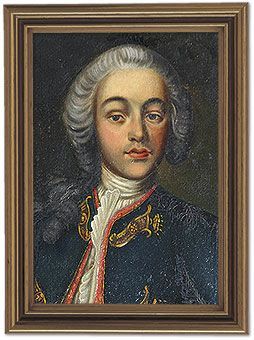
Friedrich Wilhelm Utsch
"The Hunter from Kurpfalz," father of Margarethe Utsch
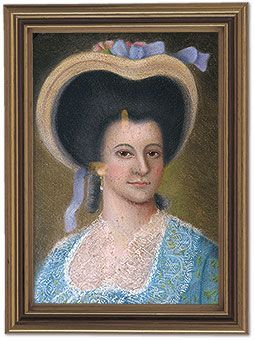
Margarethe Puricelli
née Utsch, daughter of Friedrich Wilhelm Utsch
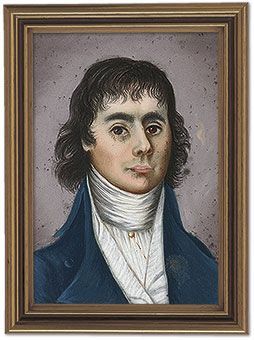
Carl Anton Puricelli
Husband of Margarethe Puricelli, son-in-law of Friedrich Wilhelm Utsch
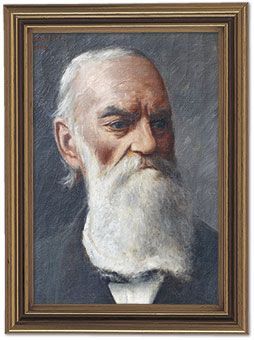
Hermann Puricelli
Grandson of Margarethe and Carl Anton Puricelli; father of Olga Kirsch-Puricelli (née Puricelli)
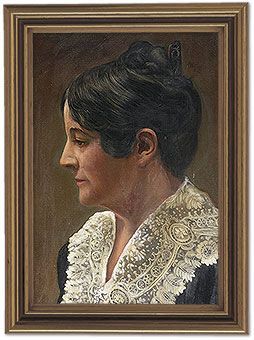
Olga Kirsch-Puricelli
née Puricelli, wife of Baron Dr. Nikolaus Kirsch-Puricelli (Kirsch)
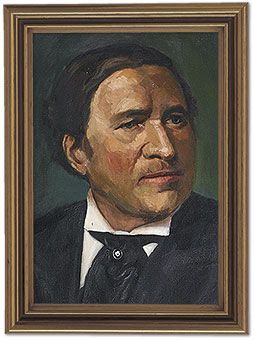
Baron Dr. Nikolaus Kirsch-Puricelli
Husband of Olga Kirsch-Puricelli, née Puricell
Stories and Legends
The numerous castles in the Middle Rhine Valley seem tailor-made for spreading ghost stories and eerie legends. Reichenstein Castle is also a place where not only did love blossom, but where many a spine-chilling event is said to have taken place. But read for yourself!
The Fake Suitor
Once upon a time, a young knight lived at Reichenstein Castle. He was madly in love with a young lady at the neighboring Rheinstein Castle. It was a love that the damsel returned with all her heart. On one of his journeys, the knight even brought his beloved a magnificent white horse as a gift. Together, the two young people rode through the surrounding forests. Their love for one another grew ever stronger, and they decided to marry.
Since it was customary at the time for a suitor to ask the bride’s father for her hand in marriage, the young knight chose his uncle to do so. The uncle immediately set off for Rheinstein Castle to secure the bride’s consent on his nephew’s behalf. But as fate would have it, the uncle was smitten the moment he laid eyes on the damsel. His original mission was quickly forgotten. Now it was the uncle himself who desired the damsel as his wife. The bride’s father did not hesitate either—after all, the uncle seemed to him a far better match for his daughter. All her lamentations and pleas were to no avail. The damsel was promised in marriage to the uncle.
On the day of the wedding, the wedding party set off for the Clemens Chapel, where the ceremony was to take place. Once again, fate intervened. On the way, the uncle and groom’s horse was stung by a hornet. The horse reared up wildly, throwing the entire wedding procession into disarray and causing utter chaos.
It was the perfect opportunity the bride had been waiting for. She quickly made her escape toward Reichenstein Castle—a route her white horse knew all too well. Before the bride’s father and the groom could catch up to her, the horse and its rider reached Reichenstein Castle at the very last second. No sooner had the mighty gate closed behind them than the furious pursuers were already standing before the locked castle gate. While attempting to scale the fortified walls of Reichenstein Castle, the treacherous uncle fell so badly that he died shortly thereafter.
So the remorseful father of the bride had no choice but to accept that he could no longer stand in the way of the love between his daughter and the young Knight of Reichenstein. Soon afterward, the wedding was celebrated once more, and the young couple lived happily ever after for many years at Reichenstein Castle.
The Headless Man
It is a historically documented fact that Rudolf of Habsburg and his men captured Reichenstein Castle in 1282. During the siege, the robber barons of Reichenstein were overpowered and hanged from the nearest trees. Only the leader of the robber barons, Dietrich von Hohenfels, managed to escape. So much for the historical facts. But an old legend tells this story a little differently. Namely, like this:
Dietrich von Hohenfels, the last surviving robber baron at Reichenstein Castle, does not flee. Instead, he begs King Rudolf to spare his nine sons and let them live. Rudolf rejects this plea and instead proposes that a “trial by ordeal” decide the matter. The site where the Clemens Chapel stands today served as the place of execution. To hear the verdict, all the sons had to line up side by side in a row. King Rudolf then spoke:
“Look, you murderer, there stand your sons. Soon your head will roll in the sand, but if you manage to run past your brood, I will spare the lives of all those you have passed.”
Dietrich von Hohenfels listened intently to the king’s words and silently glanced at the path he would soon have to run down—headlong—in order to save the lives of as many of his sons as possible.
And so it came to pass. In the very next moment, Dietrich’s head rolled across the sand. Then came moments of horror and dread that sent icy shivers down the spines of everyone present. Dietrich’s bleeding corpse did not fall to the ground. It merely staggered briefly. Then the headless man began to walk unsteadily along the line of his sons. Only when he staggered past the last of his nine sons did the headless body of the once most feared robber knight of the Middle Rhine Valley collapse to the ground. As this happened, a high fountain of blood is said to have spurted from the stump of his neck and poured down on the bystanders. Rudolf von Habsburg, so the legend goes, pale as a sheet and trembling all over, spared the nine sons and made his escape as quickly as he could.
The Mysterious Tombstone
As part of the 19th-century “Romance of the Rhine” movement, the French writer Victor Hugo also visited Reichenstein Castle, which was still in ruins at the time of his visit. Hugo recorded the following discovery in writing:
“As I walked along, my eye fell upon the corner of a tombstone peeking out from the rubble. Eagerly, I bent down. Using my hands and feet, I cleared away the debris, and within moments I had uncovered a very beautiful fourteenth-century tombstone made of red Heilbronn sandstone. On this slab lay, almost half-raised, a fully armored knight, though his head was missing. Beneath the feet of this stone man stood the following couplet, still clearly legible in large Roman capital letters:
“VOX TACUIT. PERIIT LUX. NOX RUIT ET RUIT UMBRAVIR CARET IN TUBA QUO CARET EFFIGIES”
Of whom did these verses—sad in content, barbaric in form—speak? If one were to believe the second verse on the stone, the skeleton below was as headless as the portrait above. What do the three X’s mean, which stood out so strikingly from the rest of the inscription due to their unusual size? As I examined the slab closely and cleaned it thoroughly with a handful of grass, I noticed other strange symbols around the image. They were the three X’s in three different, fantastical, and intricate forms. I learned nothing more about the beheaded, mysterious knight. A sad fate! What crime could this unfortunate man have committed? People have condemned him to death; Providence to oblivion. Darkness upon darkness. The portrait lacks a head; the inscription lacks his name; his story is absent from people’s memories. His gravestone will no doubt soon disappear. One fine day, a winegrower from Soneck or Rupertsberg will take the ashes of the mutilated skeleton—which presumably still lie beneath it—scatter them with his feet, chop up the stone, and turn the tombstone into a lintel for an inn door. And the farmers will sit around drinking, and the old women will spin, and the children will laugh at the statue of the nameless man, who was once beheaded by the executioner and is now being sawed apart by a wall.”
The tombstone described by Hugo was never actually found. Perhaps a winemaker from Trechtingshausen smashed it to use the fragments for other purposes? Or was the slab destroyed or walled over during the reconstruction of Reichenstein Castle? After all, no one knows exactly where Victor Hugo found the tombstone. Nor does anyone know to date whether Reichenstein Castle harbors any other secrets besides this one.
The Clemens Chapel
Various legends also surround the Clemen Chapel, located about 200 meters below Reichenstein Castle. One of them claims that the chapel was built by the relatives of those robber barons who were executed by Rudolf of Habsburg—at the very spot where Rudolf once pronounced his “trial by ordeal” and the “headless man” saved the lives of his nine sons.
Another legend tells of a wood-river-river-river-river-river-river-river-river-river-river-river-river-river-river-river-river-river-river-river-river-river-river-river-river-river-river-river-river-river-river-river-river-river-river-river-river-river-river-river-river-river-river-river-river-river-river-river-river-river-river-river-river-river-river-river-river-river-river-river-river-river-river-river-river-river-river-river-river-river-river-river-river-river-river-river-river-river-river-river-river-river-river-river-river-river-river-river-river-river-river-river-river-river-river-river-river-river-river-river-river-river-river-river The raftsman prayed to God to save him and his raft. At the same time, he promised that, in gratitude for the raft’s rescue, he would build a church at the spot where he found it. Indeed, after the storm, he found it on a sandbar below Reichenstein Castle. As promised, he built what is now known as the Clemens Chapel on the bank of the Rhine where he was saved.